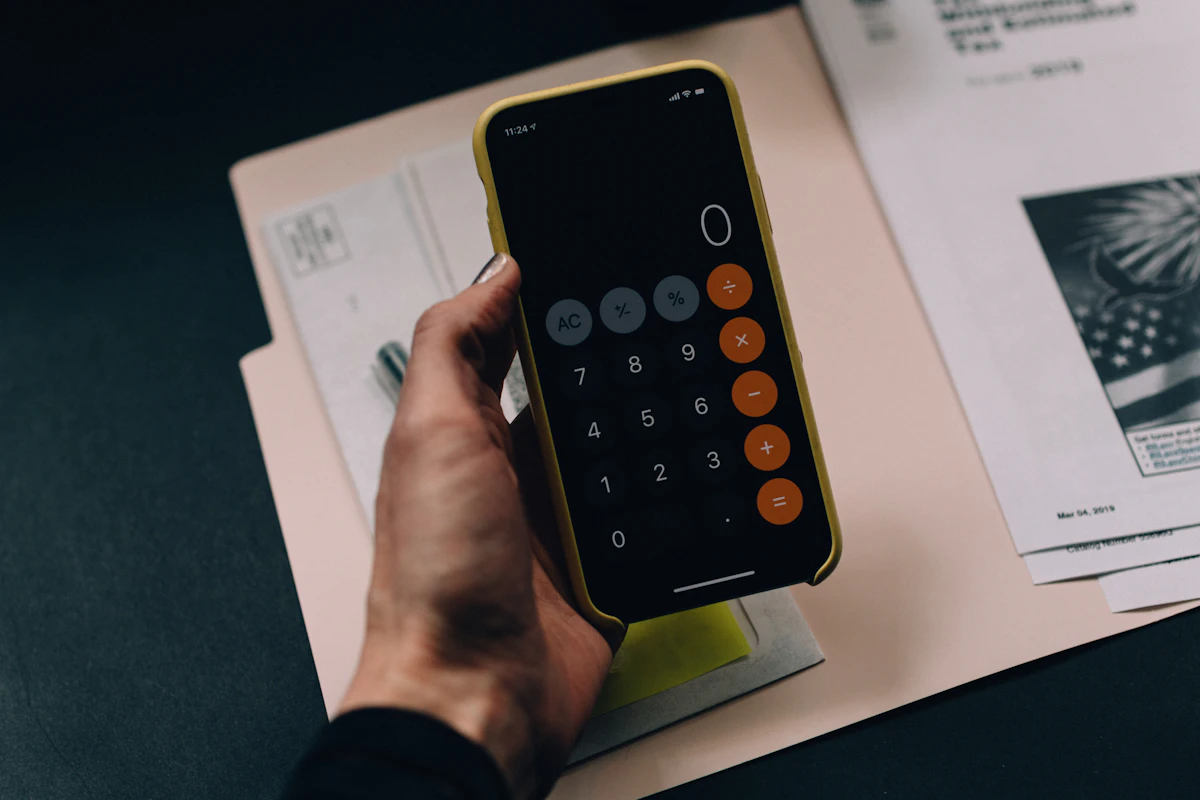
Minutes to Hours Conversion Formula: Master Decimal Hours for Timesheets, Payroll, and Invoicing
In corporate accounting, legal client billing, project management, and labor compliance, time is recorded on physical timecards or digital punch clocks in hours and minutes (e.g., 7 hours 42 minutes). However, enterprise payroll engines, invoicing software, and tax reporting systems require duration to be expressed in decimal hours (e.g., 7.70 hours) so that duration can be multiplied directly against hourly billing or wage rates. You can convert employee shift hours instantly with our [Working Hours Timesheet Calculator](#tab:working-hours) or calculate shift elapsed time with our [Time Difference Calculator](#tab:difference). Misinterpreting clock minutes as decimals (such as entering 45 minutes as 0.45 hours instead of 0.75 hours) introduces severe financial discrepancies and wage claims under the Fair Labor Standards Act (FLSA). For complete timesheet and break calculation rules, read our [Timesheet Work Hours & Lunch Breaks Guide](#article:timesheet-calculator-work-hours-lunch-breaks-guide). In this comprehensive guide, we explore the exact mathematical conversion formulas, FLSA rounding compliance regulations, 10th-hour vs 100th-hour rounding protocols, and minute-to-decimal conversion tables.
Key Takeaways & Expert Insights
- Master the fundamental division rule: Decimal Hours = Total Minutes ÷ 60.
- Differentiate between clock time (HH:MM) and decimal billing hours (H.XX).
- Understand the US Department of Labor FLSA 7-minute rounding rule (29 CFR § 785.48).
- Apply 10th-of-an-hour (6-minute) and 100th-of-an-hour decimal conversion standards.
- Avoid costly payroll miscalculations caused by treating clock minutes as decimal values.
Table of Contents
1. The Core Mathematical Formula: Dividing Minutes by 60
To calculate decimal hours from minutes, apply the division rule derived from base-60 sexagesimal mathematics. Because one hour contains exactly 60 minutes, dividing any minute value by 60 yields its decimal fraction of an hour:
Decimal Hours = Total Minutes ÷ 60.
If you have a duration expressed in both hours and minutes (e.g., 8 hours and 36 minutes), keep the whole hour count unchanged (8), and convert the minutes portion by dividing by 60: 36 ÷ 60 = 0.60. Add the whole hours to the decimal fraction: 8 + 0.60 = 8.60 decimal hours.
To reverse the process and convert decimal hours back into hours and minutes: keep the whole number as hours, and multiply the decimal fraction by 60. For example, if a timesheet records 6.85 hours: whole hours = 6. Take 0.85 and multiply by 60: 0.85 * 60 = 51 minutes. The clock time is 6 hours and 51 minutes.

2. Why Clock Minutes ≠ Decimal Fractions (The Common Payroll Trap)
One of the most frequent administrative errors in payroll processing is confusing clock minutes with decimal percentages. Because base-10 numbers run from 0 to 99 while clock minutes run from 0 to 59, people unaccustomed to time math often mistakenly write 30 minutes as 0.30 hours.
Consider the severe financial impact of this error: An employee works 40 hours and 30 minutes in a week at an hourly wage of $30.00/hour. 30 minutes equals 30 ÷ 60 = 0.50 decimal hours. Their true gross pay should be 40.50 hours * $30.00 = $1,215.00.
If an untrained manager erroneously enters 40.30 hours into payroll software, the employee receives 40.30 * $30.00 = $1,209.00—underpaying the worker by $6.00 per week. Across a 50-person department over a year, this accounting mistake underpays workers by $15,600, triggering labor union grievances and Department of Labor wage investigations.
Working Hours Timesheet Calculator
Auto-convert work shifts and minutes into decimal payroll hours.
Try Calculator Tool Now
3. US Department of Labor FLSA Rounding Rules (29 CFR § 785.48)
Under Title 29 of the Code of Federal Regulations (29 CFR § 785.48(b)), the US Department of Labor Wage and Hour Division permits employers to round employee punch times to the nearest 5 minutes, nearest 10th of an hour (6 minutes), or nearest quarter-hour (15 minutes), provided that the rounding practice is neutral and does not consistently undercompensate employees over time.
The 15-Minute / 7-Minute Rounding Rule: When rounding punch times to 15-minute increments (0.25 hrs), employers apply the "7-minute rule":
• 1 to 7 minutes worked: Rounded DOWN to 0 minutes (0.00 hours).
• 8 to 14 minutes worked: Rounded UP to 15 minutes (0.25 hours).
• 16 to 22 minutes worked: Rounded DOWN to 15 minutes (0.25 hours).
• 23 to 29 minutes worked: Rounded UP to 30 minutes (0.50 hours).
• 31 to 37 minutes worked: Rounded DOWN to 30 minutes (0.50 hours).
• 38 to 44 minutes worked: Rounded UP to 45 minutes (0.75 hours).
• 46 to 52 minutes worked: Rounded DOWN to 45 minutes (0.75 hours).
• 53 to 59 minutes worked: Rounded UP to 60 minutes (1.00 hour).
4. Tenths of an Hour (6-Minute Increment) System
Many large enterprise corporations, state governments, and legal law firms prefer tracking time in tenths of an hour (0.10 hr increments) rather than quarter-hours. Because 1 hour contains 60 minutes, 1/10th of an hour represents exactly 6 minutes.
Under the 6-minute increment system, time is rounded to the nearest 6-minute window:
• 1 to 3 minutes: Round to 0.0 hrs (0 min)
• 4 to 9 minutes: Round to 0.1 hrs (6 min)
• 10 to 15 minutes: Round to 0.2 hrs (12 min)
• 16 to 21 minutes: Round to 0.3 hrs (18 min)
• 22 to 27 minutes: Round to 0.4 hrs (24 min)
• 28 to 33 minutes: Round to 0.5 hrs (30 min)
• 34 to 39 minutes: Round to 0.6 hrs (36 min)
• 40 to 45 minutes: Round to 0.7 hrs (42 min)
• 46 to 51 minutes: Round to 0.8 hrs (48 min)
• 52 to 57 minutes: Round to 0.9 hrs (54 min)
• 58 to 60 minutes: Round to 1.0 hrs (60 min)
5. Complete Minute-to-Decimal Hours Translation Table (1–60 Mins)
Below is the official quick-reference lookup table used by payroll clerks and accountants to convert raw minute counts (1 through 60 minutes) into exact 2-decimal and 4-decimal hour values:
| Minutes | Exact Division | 2-Dec Hour | 4-Dec Hour | 15-Min Rounding | Tenths Rounding |
|---|---|---|---|---|---|
| 1 min | 1 / 60 | 0.02 hrs | 0.0167 hrs | 0.00 hrs | 0.0 hrs |
| 5 min | 5 / 60 | 0.08 hrs | 0.0833 hrs | 0.00 hrs | 0.1 hrs |
| 6 min | 6 / 60 | 0.10 hrs | 0.1000 hrs | 0.00 hrs | 0.1 hrs |
| 10 min | 10 / 60 | 0.17 hrs | 0.1667 hrs | 0.25 hrs | 0.2 hrs |
| 12 min | 12 / 60 | 0.20 hrs | 0.2000 hrs | 0.25 hrs | 0.2 hrs |
| 15 min | 15 / 60 | 0.25 hrs | 0.2500 hrs | 0.25 hrs | 0.3 hrs |
| 20 min | 20 / 60 | 0.33 hrs | 0.3333 hrs | 0.25 hrs | 0.3 hrs |
| 24 min | 24 / 60 | 0.40 hrs | 0.4000 hrs | 0.50 hrs | 0.4 hrs |
| 30 min | 30 / 60 | 0.50 hrs | 0.5000 hrs | 0.50 hrs | 0.5 hrs |
| 36 min | 36 / 60 | 0.60 hrs | 0.6000 hrs | 0.50 hrs | 0.6 hrs |
| 40 min | 40 / 60 | 0.67 hrs | 0.6667 hrs | 0.75 hrs | 0.7 hrs |
| 45 min | 45 / 60 | 0.75 hrs | 0.7500 hrs | 0.75 hrs | 0.8 hrs |
| 48 min | 48 / 60 | 0.80 hrs | 0.8000 hrs | 0.75 hrs | 0.8 hrs |
| 50 min | 50 / 60 | 0.83 hrs | 0.8333 hrs | 0.75 hrs | 0.8 hrs |
| 55 min | 55 / 60 | 0.92 hrs | 0.9167 hrs | 1.00 hrs | 0.9 hrs |
| 60 min | 60 / 60 | 1.00 hrs | 1.0000 hrs | 1.00 hrs | 1.0 hrs |
6. Practical Worked Examples: Employee Payroll & Client Invoicing
Example 1: Weekly Payroll Timesheet Calculation. An employee logs the following daily hours across a 5-day workweek: Monday: 8h 15m; Tuesday: 7h 45m; Wednesday: 8h 30m; Thursday: 8h 12m; Friday: 6h 50m. Step 1: Sum whole hours: 8 + 7 + 8 + 8 + 6 = 37 hours. Step 2: Sum minutes: 15 + 45 + 30 + 12 + 50 = 152 minutes. Step 3: Convert minutes to hours: 152 ÷ 60 = 2 hours remainder 32 minutes. Step 4: Total clock duration = 37 + 2 = 39 hours and 32 minutes. Step 5: Convert 32 minutes to decimal hours: 32 ÷ 60 = 0.5333. Step 6: Total decimal billing time = 39.53 hours.
Example 2: Attorney Billable Hours Invoicing. A law firm bills client consultation in 6-minute (0.10 hr) increments. An attorney conducts three client calls lasting 14 minutes, 22 minutes, and 37 minutes. Call 1 (14 min): Rounds to 0.20 hrs (12 min window). Call 2 (22 min): Rounds to 0.40 hrs (24 min window). Call 3 (37 min): Rounds to 0.60 hrs (36 min window). Total billable time = 0.20 + 0.40 + 0.60 = 1.20 decimal hours.
Recommended Internal Links & Calculator Suite
Working Hours Timesheet Calculator
Auto-convert work shifts and minutes into decimal payroll hours.
Time Difference Calculator
Calculate exact elapsed time between start and end clock times.
Time Conversion Engine
Convert minutes, hours, and days in real time.
Timesheet Work Hours & Lunch Breaks Guide
Detailed guide to calculating shift start/end times and meal break deductions.
Weeks to Months Payroll Conversion Guide
Accounting guide to 4.3482 average weeks per month payroll schedules.
Official Standards & External References
Frequently Asked Questions
Q1:Why do I divide minutes by 60 to get decimal hours?
Dividing minutes by 60 expresses the elapsed time as a fractional portion of 1 full hour. Standard chronometry operates on the sexagesimal (base-60) system, whereas accounting, payroll software, and invoicing systems operate on the base-10 decimal system. In the decimal system, 1.0 represents one whole entity: • Since 1 hour = 60 minutes, each single minute equals exactly $1/60 \approx 0.01667$ of an hour. • 15 Minutes: $15 \div 60 = 0.25$ hours ($25\%$ of an hour) • 30 Minutes: $30 \div 60 = 0.50$ hours ($50\%$ of an hour) • 45 Minutes: $45 \div 60 = 0.75$ hours ($75\%$ of an hour) If you simply entered clock minutes directly into payroll software (e.g., entering 7 hours and 30 minutes as "7.30"), the software would multiply 7.30 by the employee’s hourly wage. At $30/hr, $7.30 \times 30 = \$219.00$, whereas the worker actually earned $7.50 \times 30 = \$225.00$—an illegal underpayment of $6.00 on a single shift. Dividing minutes by 60 is mathematically mandatory for accurate financial computation.
Q2:How does the FLSA 7-minute rule work for payroll rounding?
Under the US Department of Labor Fair Labor Standards Act (FLSA), codified under 29 CFR § 785.48(b), employers are legally permitted to round employee punch clock times to the nearest 15-minute interval (0.25 decimal hours) using the standard 7-minute rule: • Minutes 1 through 7 past the quarter-hour round DOWN to the previous quarter-hour (e.g., 08:07 AM clock-in rounds down to 08:00 AM; 05:22 PM clock-out rounds down to 05:15 PM). • Minutes 8 through 14 past the quarter-hour round UP to the next quarter-hour (e.g., 08:08 AM clock-in rounds up to 08:15 AM; 05:23 PM clock-out rounds up to 05:30 PM). Legal compliance threshold: The FLSA requires that rounding must be applied neutrally in both directions (favoring neither the employer nor the employee systematically). If an employer rounds clock-ins up to the employer’s benefit but rounds clock-outs down to shorten payable time, it constitutes an actionable wage violation under federal labor law.
Q3:What is the difference between 2-decimal and 4-decimal hours?
The distinction between 2-decimal and 4-decimal hours involves rounding granularity and the prevention of compounding mathematical drift in enterprise payroll calculations: • 2-Decimal Precision (Hundredths): Standard for client-facing invoices and customer billing summaries (e.g., 20 minutes = 0.33 hours; 40 minutes = 0.67 hours). While visually clean, truncating 20 minutes from $0.3333\dots$ to $0.33$ drops 0.0033 hours (12 seconds) per shift. • 4-Decimal Precision (Ten-Thousandths): Standard in automated payroll engines (ADP, Paychex, Workday). For example, 20 minutes is stored as 0.3333 hours, and 10 minutes is stored as 0.1667 hours. Compounding impact: Across a manufacturing workforce of 500 employees logging 20-minute daily prep shifts, 2-decimal truncation loses 1.65 hours ($49.50) daily, or over $12,800 annually. Modern timesheet engines compute in 4 decimals and round only the final monetary paycheck to 2 decimal cents.
Q4:How do I convert 45 minutes into decimal hours?
To convert 45 minutes into decimal hours, apply the universal conversion formula: $\text{Decimal Hours} = \frac{\text{Minutes}}{60}$. Dividing 45 by 60 yields exactly 0.75 decimal hours ($45 \div 60 = 0.75$). If an employee worked 8 hours and 45 minutes, their total payable time is $8 + 0.75 = 8.75\text{ decimal hours}$. Multiplying 8.75 hours by an hourly pay rate of $24.00/hour produces a gross pay of $8.75 \times 24 = \$210.00$. In fraction terms, 45 minutes represents exactly three-quarters ($3/4$) of one hour.
Conclusion & Summary
Converting minutes to hours accurately is essential for legal compliance, transparent invoicing, and payroll integrity. By using the exact formula "Decimal Hours = Minutes ÷ 60" or applying FLSA-compliant rounding rules, HR teams and business managers can ensure 100% precision in employee compensation.
Related Guides & Articles

Seconds to Minutes Conversion Guide: Formulas, Modulo Arithmetic, and High-Speed Lookup Tables

Leap Year Rules & Gregorian Calendar Math: The 4-Year, 100-Year, and 400-Year Century Algorithm